Start with the cable route and supply layout
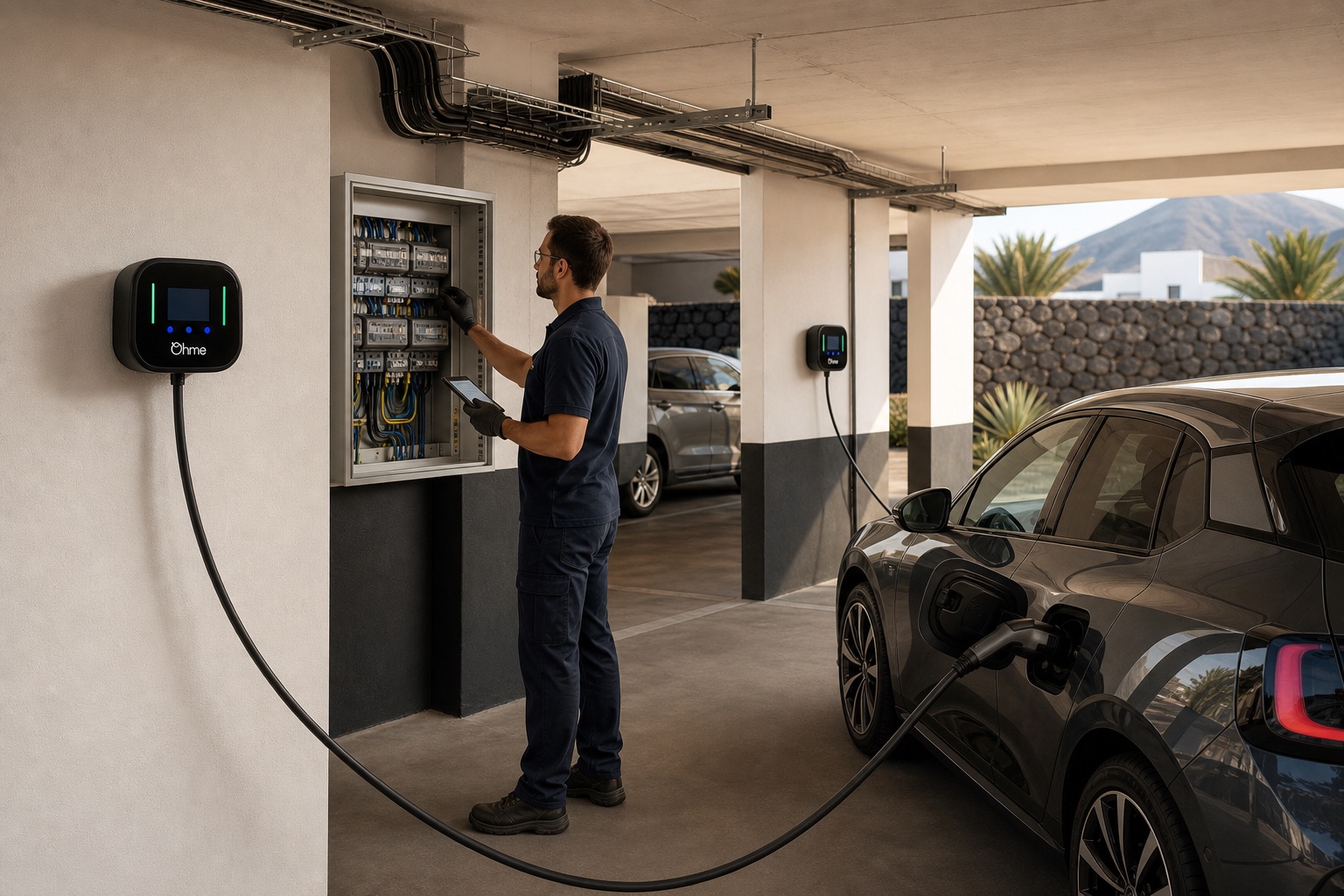
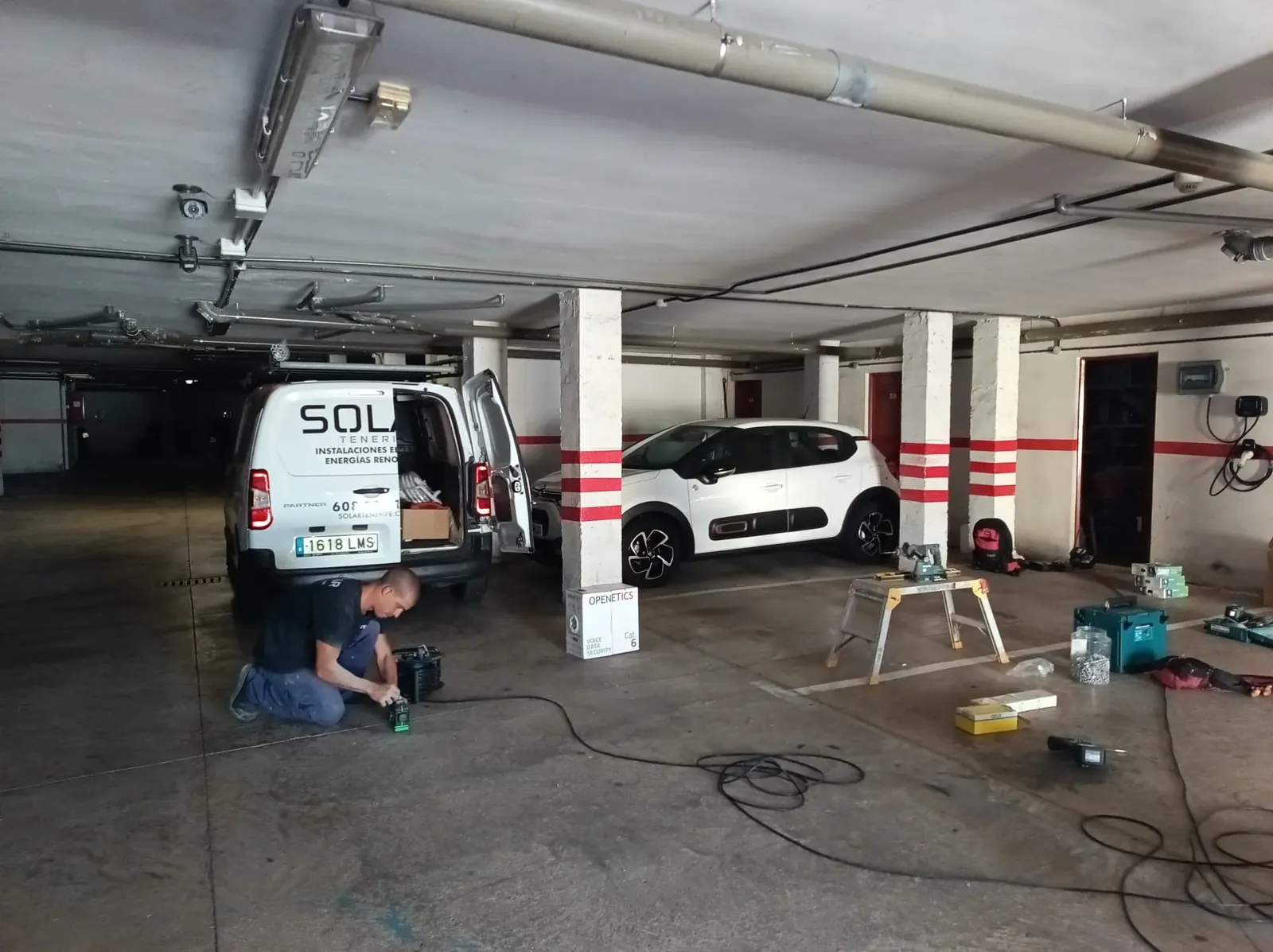
In a communal garage, the distance between the meter bank and the parking space usually determines much of the work. Before choosing the charger, consider where the circuit can run, which communal areas it crosses and how the containment will fit without interfering with other services.
ITC-BT-52 provides different layouts for shared car parks. Choosing the right one allows consumption to be measured correctly, the circuit to be sized and a solution to be installed that can be maintained or expanded in an organised way.
Notifying the residential community and planning the work
When a private charging point is installed in an individual parking space, the Spanish Horizontal Property Law requires prior notification to the residential community. That notification should be accompanied by a clear description of the proposed cable route, so the work is understandable and properly documented.
Schedules, access to the meter room and any work in communal areas should also be coordinated. A prior technical visit avoids improvisation on installation day.
Protection devices, power capacity and dynamic load management
The charger needs a dedicated circuit and protection devices suitable for the equipment, cable route and selected layout. Fitting the device to the wall is not enough: conductor cross-section, voltage drop, protection against electric shock, overcurrent and overvoltage must all be checked.
Dynamic load management can adapt vehicle charging to the power available at any given time. When correctly configured, it helps make use of the contracted power capacity and reduces the risk of the installation exceeding its limit while other appliances are running.
A finish designed for everyday use
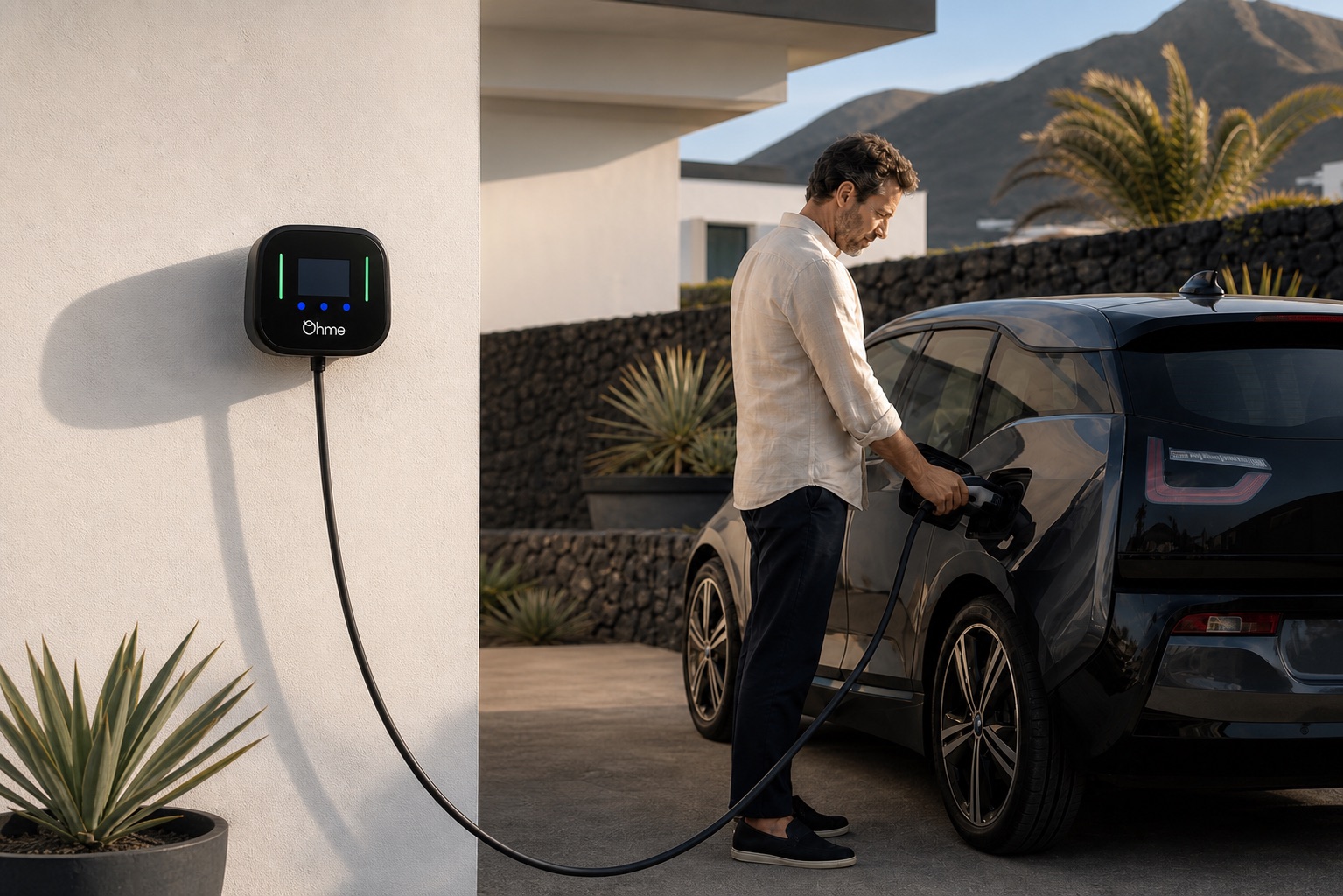
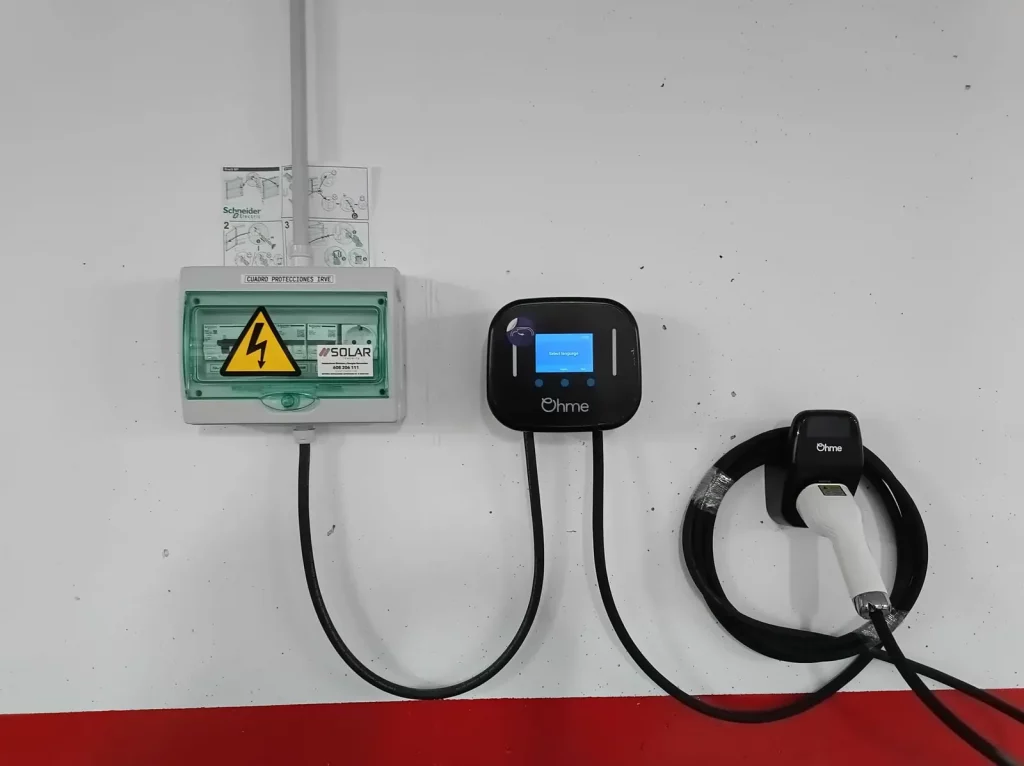
The location must allow the car to be connected comfortably, the cable to be stored and the charger to be accessed without creating obstacles. The distribution board, cable containment and signage must be secure, identified and protected against impacts typical of a car park.
For an Ohme installation, commissioning includes configuring the equipment, checking communication and carrying out electrical checks before handing it over to the user. The result should be safe, easy to use and straightforward to inspect in future.
Frequently asked questions
Do I need the owners' association to approve the charger?
For a private charging point in an individual parking space, national regulations require prior notification to the owners’ association. The route should be documented and each case checked before work begins.
Do I need to increase my contracted power?
Not always. It depends on the available power, charging habits and the possibility of using dynamic load management.
Can the installation be expanded to serve more parking spaces?
Yes, but it is better to plan for this from the initial design so that cable containment and a layout that support future expansion can be chosen.