Installation is not complete just because the charger switches on
A green light on the charger confirms that it is receiving power, but does not by itself prove that the whole installation is complete. Handover should include electrical checks, configuration, documentation and a straightforward explanation so the owner knows how to use the system and keep the important information.
Charging points are subject to Spain's Low-Voltage Electrical Regulations and to the ITC-BT-52, which sets out specific requirements for charging infrastructure. The chosen arrangement, power, circuit route and property characteristics determine the scope of the documentation and procedures applicable in each case.
Certificate, technical report and installation diagram
The installation must be defined in the appropriate technical documentation, normally a Technical Design Report or, where its characteristics require it, a project. After carrying out and verifying the work, the installation company must issue the Electrical Installation Certificate and process it under the applicable procedure.
The Low-Voltage Electrical Regulations also provides for the owner to have operating and maintenance instructions, a single-line diagram with the main specifications and a sketch of the route. These documents show where the charger is supplied from, which protection devices it uses and where the cable containment runs.
It is advisable to keep the certificate, technical report or project, invoice, charger specification sheet and any registration documents together. The exact documentation may vary according to the installation, so the installation company should explain what is required in that particular case.
Tests before considering the work complete
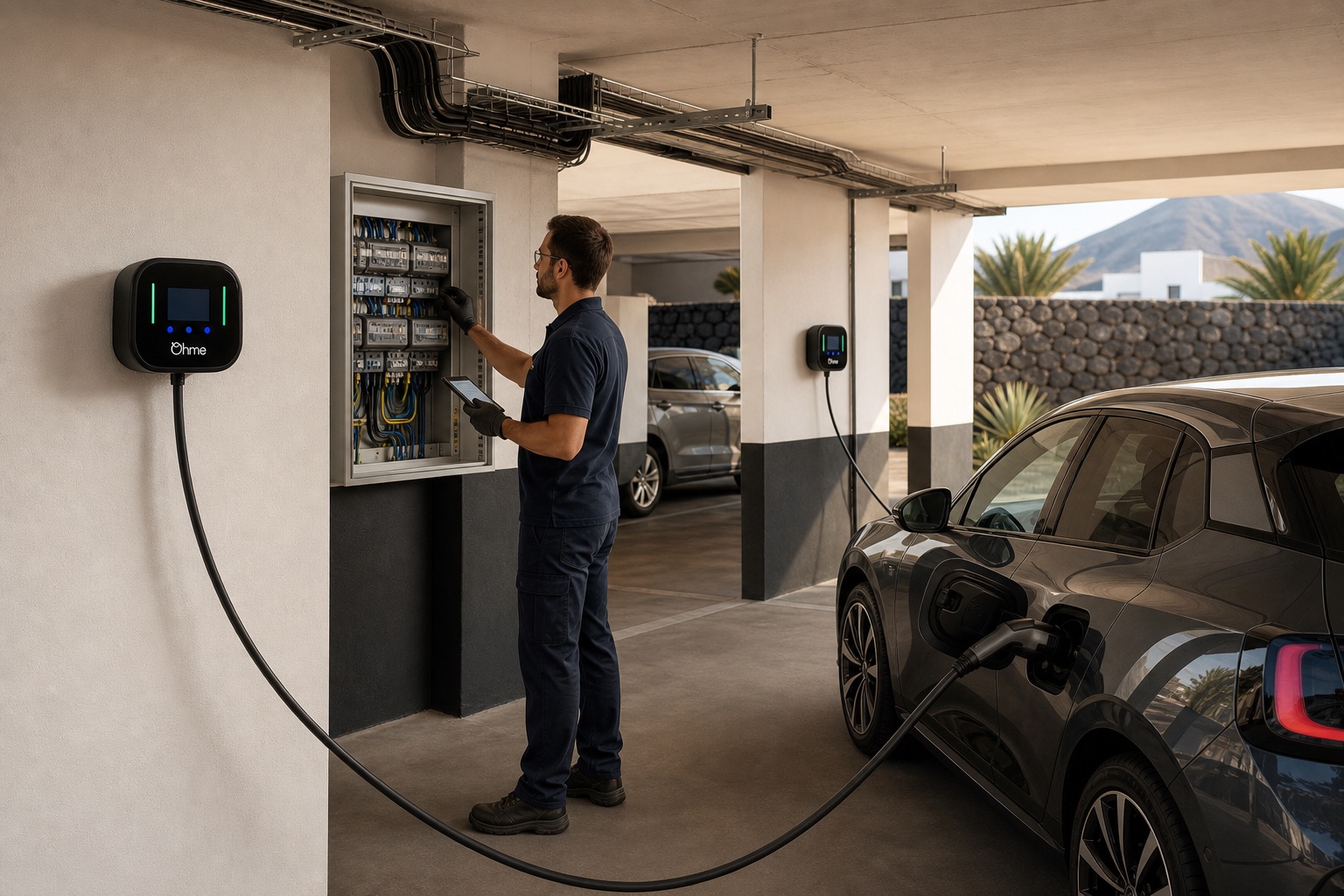
Commissioning must check the complete circuit, not just the wallbox. The installer checks terminal tightness, protective conductor continuity, insulation, earthing and the operation of the relevant protective devices. They must also confirm that the configured maximum current is compatible with the circuit design and existing installation.
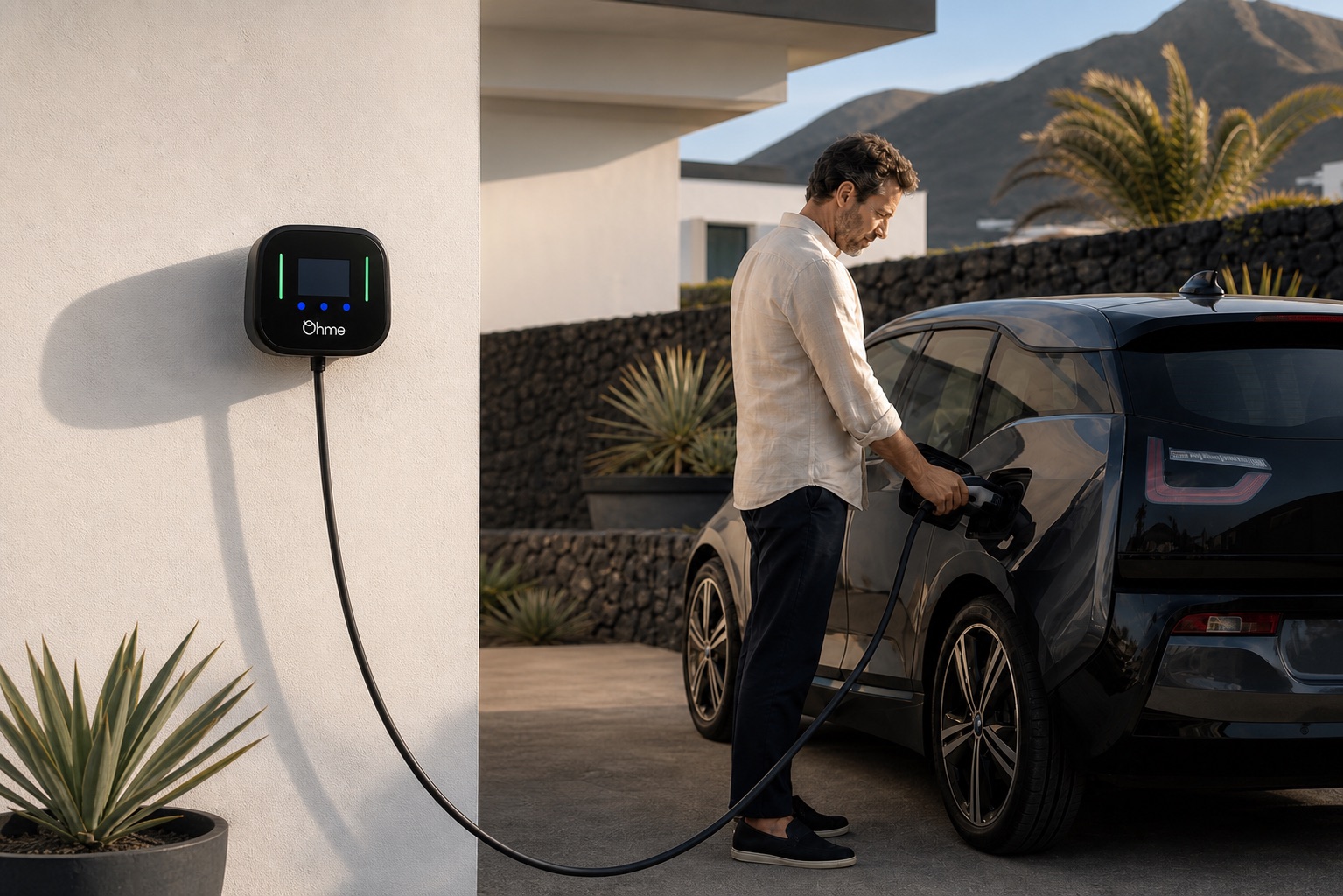
A real charging test should then be carried out with the vehicle or suitable test equipment. This checks communication between the car and charger, session start and stop, connector locking and the absence of overheating or abnormal warnings. If dynamic load management is fitted, it must be checked while other household loads are operating.
App, scheduling and power management
With a smart charger such as Ohme, handover includes making the connectivity operational and demonstrating the functions that will actually be used: starting a charge, checking consumption, setting schedules and adjusting limits within the authorised values. The main account should remain under the customer's control, with their own email address and a password they can recover.
If the system uses surplus solar energy or limits charging to avoid exceeding available power, it is important to explain which mode is active and what will happen when household consumption changes. Documented configuration makes it easier to diagnose any issue without starting from scratch.
Warranties and practical maintenance
The customer should know what the charger manufacturer covers and what relates to the installation. It is useful to retain the model, serial number, commissioning date and support contact. It is also worth noting the initial app or firmware version when it forms part of the equipment's operation.
For day-to-day use, keep the cable and connector clean, avoid impacts and watch for damage, looseness, overheating, unusual smells or repeated tripping. Do not open the equipment or alter protective devices or electrical limits yourself. If there is an anomaly, water ingress, nearby building work or a major change to the installation, the appropriate course is to request an inspection by a qualified installation company.
A good handover makes three things clear: the installation is safe, the charger is configured for actual use and the owner has the documentation needed to look after and maintain it.
Frequently asked questions
Which document certifies the charger's electrical installation?
The main document is the Electrical Installation Certificate issued by the installation company. Depending on the work, it will be accompanied by a Technical Design Report or a project and the relevant administrative processing.
Is it enough to check that the car starts charging?
No. In addition to a real charging test, the circuit, earthing, protection devices, configured current and, where fitted, dynamic load management must be checked.
What should I keep after installation?
Keep the certificate, technical report or design, schematic, sketch, instructions, invoice, technical data sheet, warranty and login details for the charger app.